original structure design Carlton Cornish
Pilot Model conception and construction by Brett Gallant
3D CAD Artwork by Emery Jackson, Jim Murdock, Karl Allison, and Brett Gallant
Names, Logos, Design, and Photographs Copyright Brett Gallant
exclusive structure design ownership Brett Gallant
- In Loving Memory of Jeff Crawford and Jim Ernst -
the HO and O Scales
Crawford and Ernst
at the Riverfront
click here to
Return the Main Crawford and Ernst Page
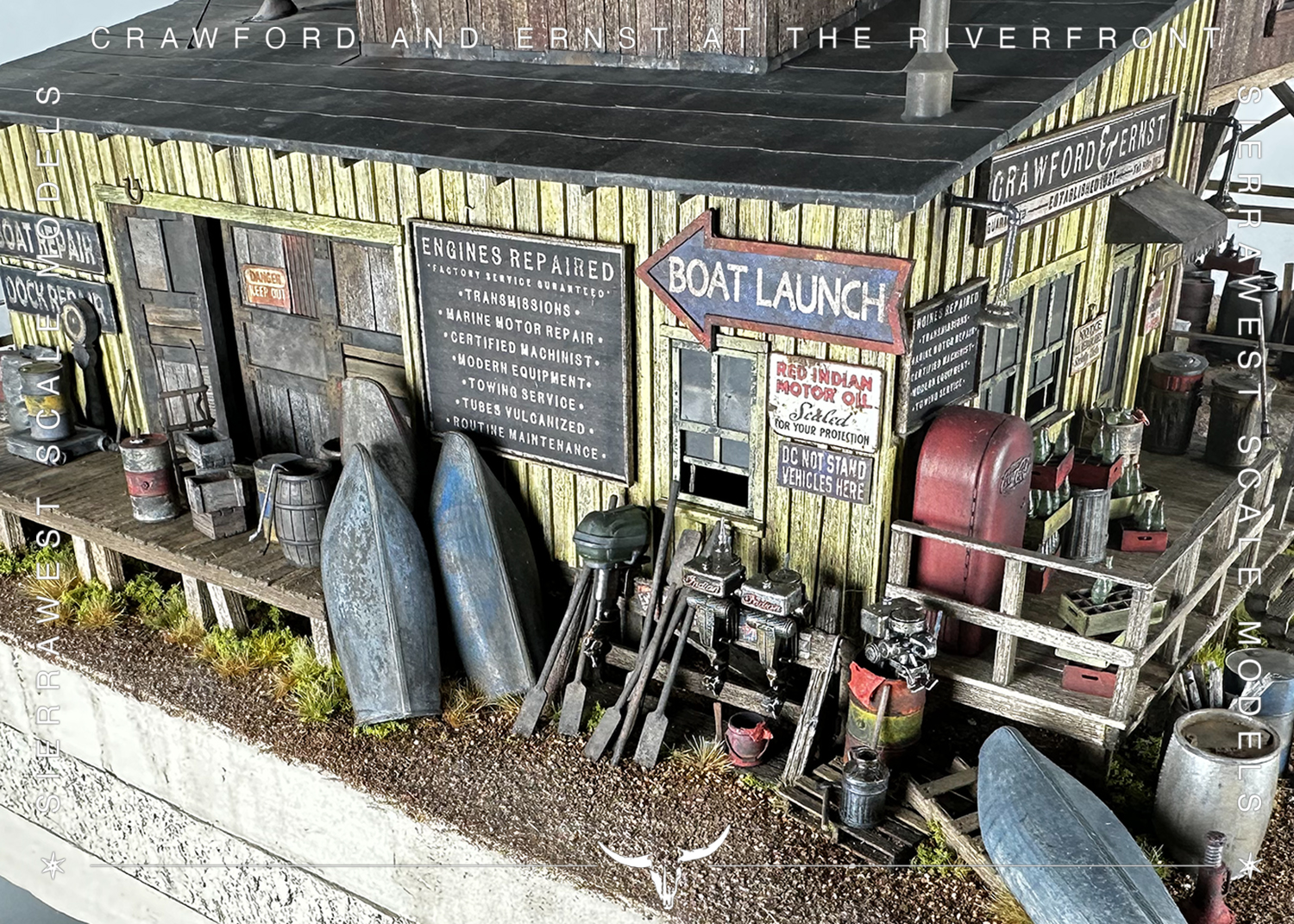 This was the first scene I developed for the Riverfront. I always envisioned an outboard motor rack as the anchor and focal point of a detailed scene. The goal was to set the tone and create the “first page” of the riverfront story. I found a photograph of this wooden rack and knew I had found the perfect subject to model. You will see many outboard motors placed around the diorama. Here the Evinrude and Indian motors are positioned on the rack “tiller-up” as would be the case for storage. Notice the Indian motor parked in the oil drum. They were stored like this so they could be test run during repair once the drum was filled with water. The rowboats and oars reinforce the river adjacent narrative quite well. Add the great signage - especially the boat launch arrow sign - and great storytelling begins without any water. What an awesome scene to begin out tour with.
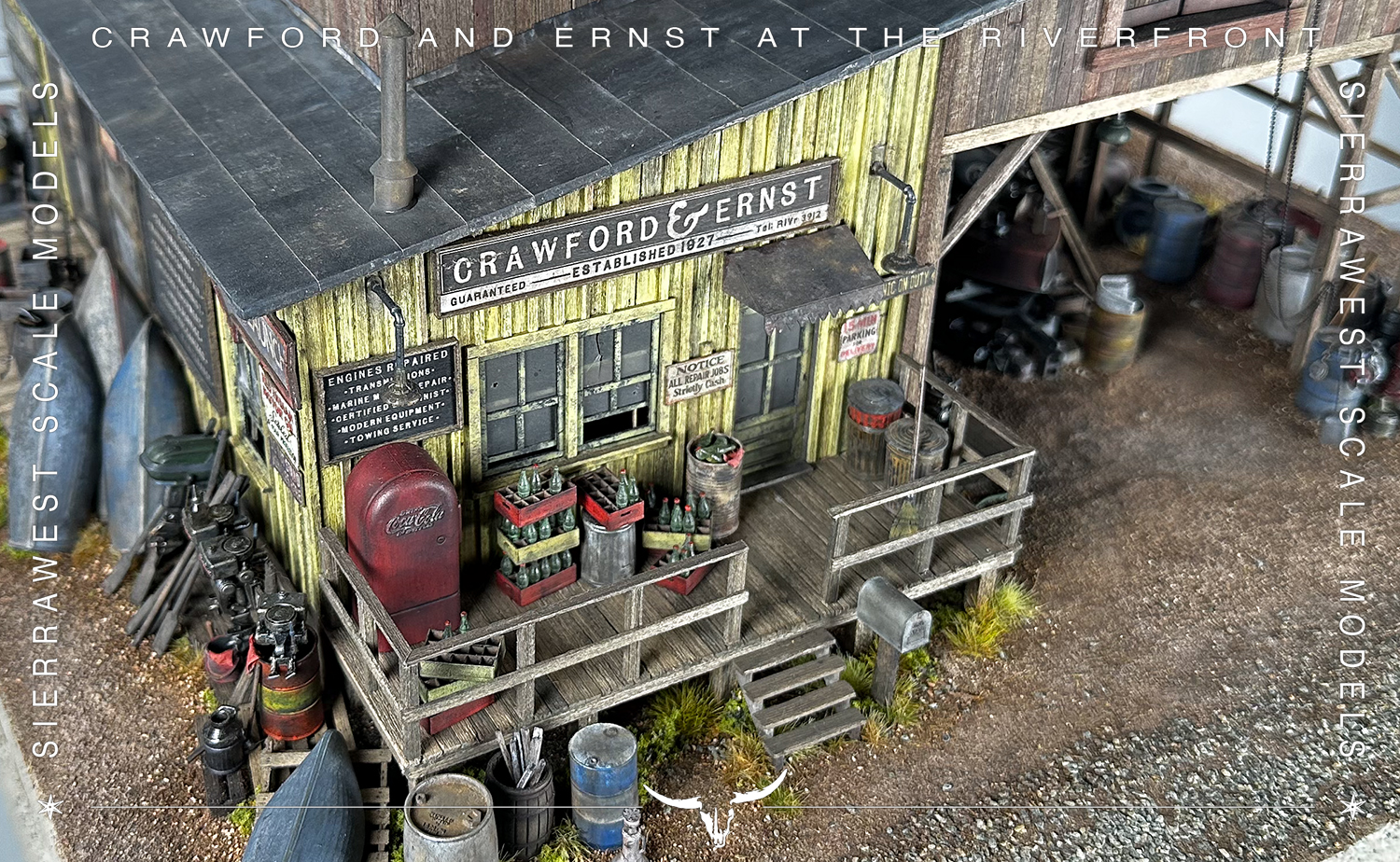 As we move around to the front porch the cluttered coke machine scene unfolds. I always wanted to develop this classic story but was never satisfied using cast metal or resin bottles. As many of you know, the translucent bottles were one of the first 3D Printed details I created back in early 2020 and make this scene possible. They are all individual crates and bottles including open and closed. Zoom in and you can see the red caps on many. The wonderful industrial lighting anchors the great Crawford and Ernst sign on each end. Make sure to take special note of the early 20th Century phone number located on the bottom right of this sign.
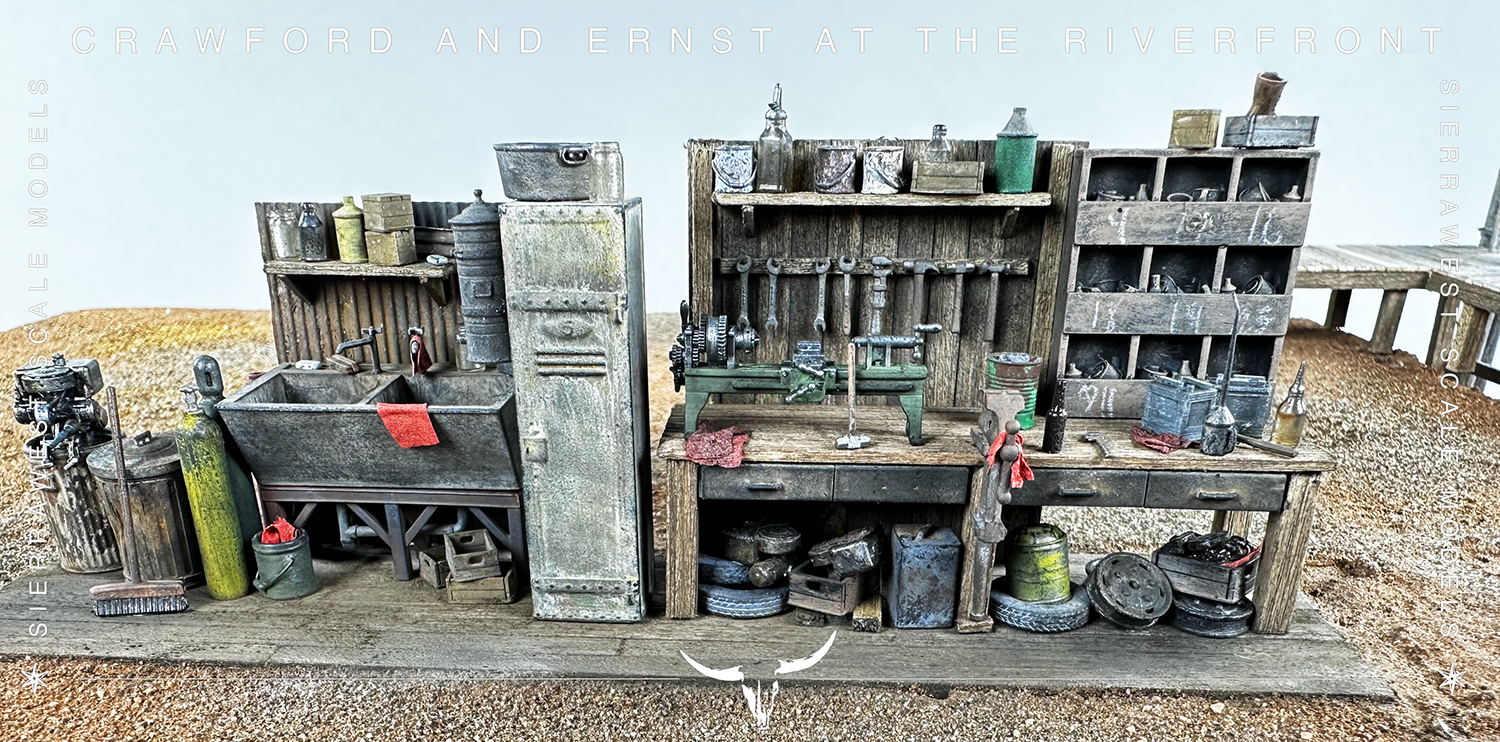 Located under the second story warehouse is the awesome workbench and slop sink. Such amazing individual details and all is quite visible under the warehouse. Note the small table-top lathe on the workbench. This lathe is driven by a small electric motor. The slop sink is a favorite detail and reminds me of my Dad bent over a very similar sink washing lawn mower parts. Note the small white bars of hand soap as well as the plumbing underneath. There are also a few horseshoes over the various exterior doors. This is a small tribute to my Dad as well. What ways can you add a small detail here or there to honor someone special?
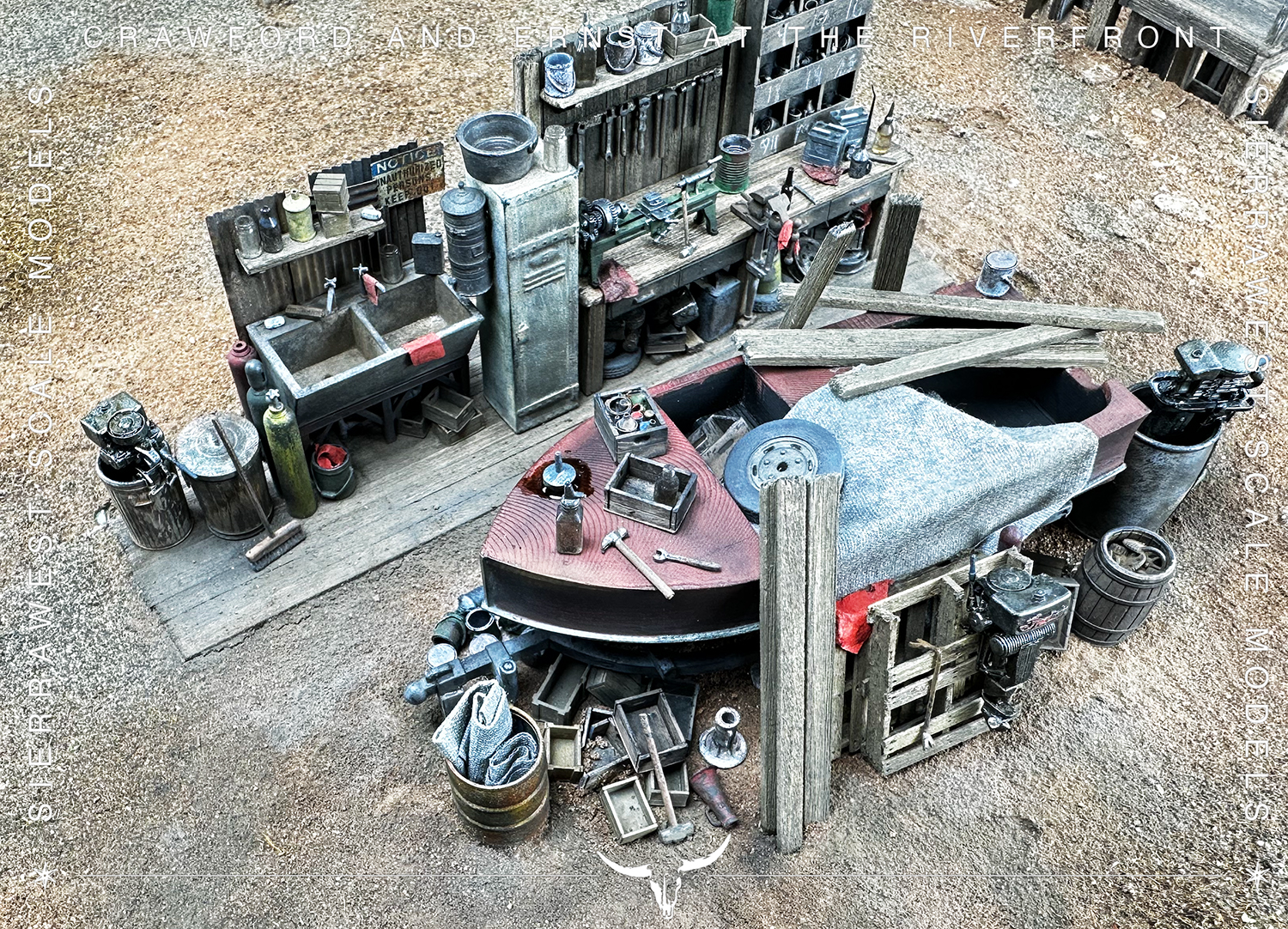 Parked in front of the workbench and slop sink is the wonderful 16 foot long boat on a trailer. It’s motor has been removed and can be seen at the stern inside the large oil drum. I love all the realistic tools and clutter surrounding and framing the scene. The tarp tossed haphazardly over the top creates a sense of neglect. Maybe this small boat is waiting on some parts from a distant supplier and has seen better days. Note the ground cover in this area is compacted down from all the constant foot traffic.
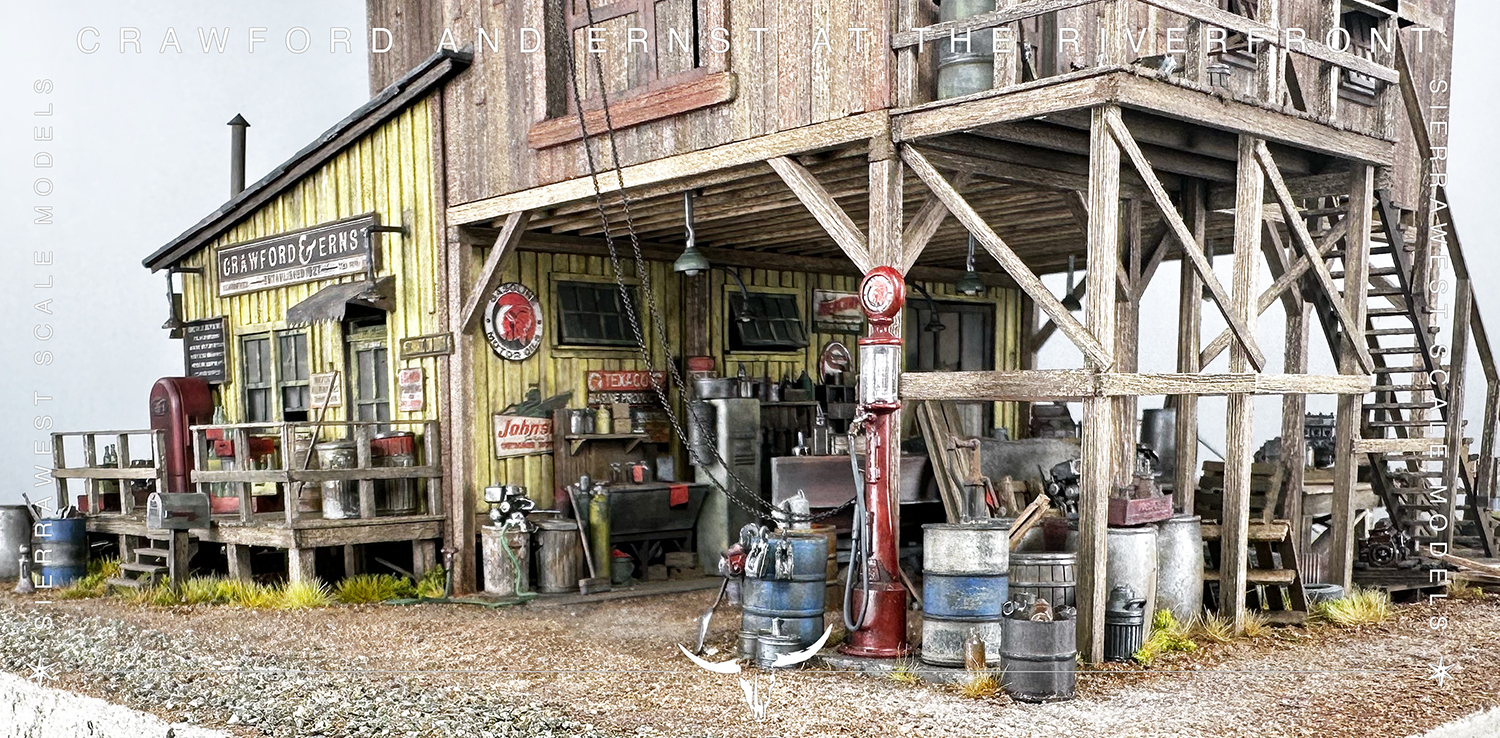 Next we get a great view of the front right corner of the diorama and just how well all those great details sitting under the second story warehouse can be seen. Since the second story warehouse is empty, with easy access to the space below, I am sure many of you will add lighting. I just love the Fry 177 Gas Pump scene. While the pump itself is super cool, I want to point out the oil dispensing drum and the small hooks and pulleys hanging on the rim of the of the all blue drum. These are used to rig and aide in bringing material that is headed up to the second story warehouse for storage. You can see the hoist chain hanging on a post directly behind the pump. Now speaking of the drums located to either side of the gas pump; these represent two of the three different oil drum “eras” located on the Crawford and Ernst diorama. The white and blue oil dispensing drum is a classic 55 gallon drum. The all blue drum to the left is a slightly earlier version of this drum. You can see it’s geometry is slightly rounded in comparison. The next photograph will introduce us to the earliest drum which is dramatically different.
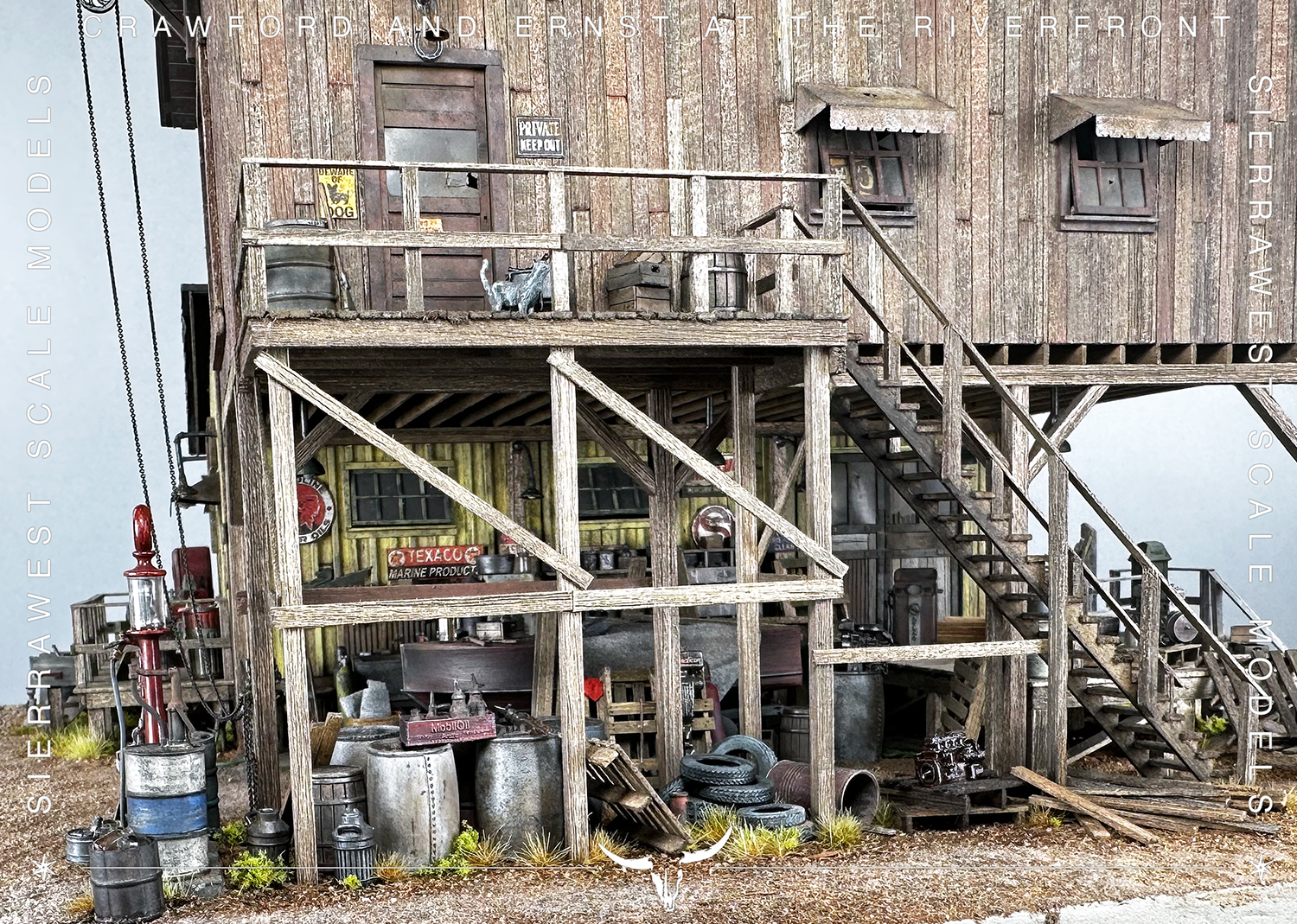 As we swing around to the right side I want to focus on the two silver oil drums located underneath the second story porch. These are the earliest oil drum versions and were actually designed to contain 56 gallons of oil. They had a lapped-riveted seam (easily visible in the frontmost drum) and were well known for leaking. Like all of the many details included in the Riverfront, the drums were carefully researched and then hand drawn for the most creative control possible. For someone like me who is an absolute control freak, nothing less is acceptable! Be sure to study the oil drums in your kit. You will see a great assortment of styles including open and closed with various details that add variety and keep the plain old drum interesting and an important part of each scene.
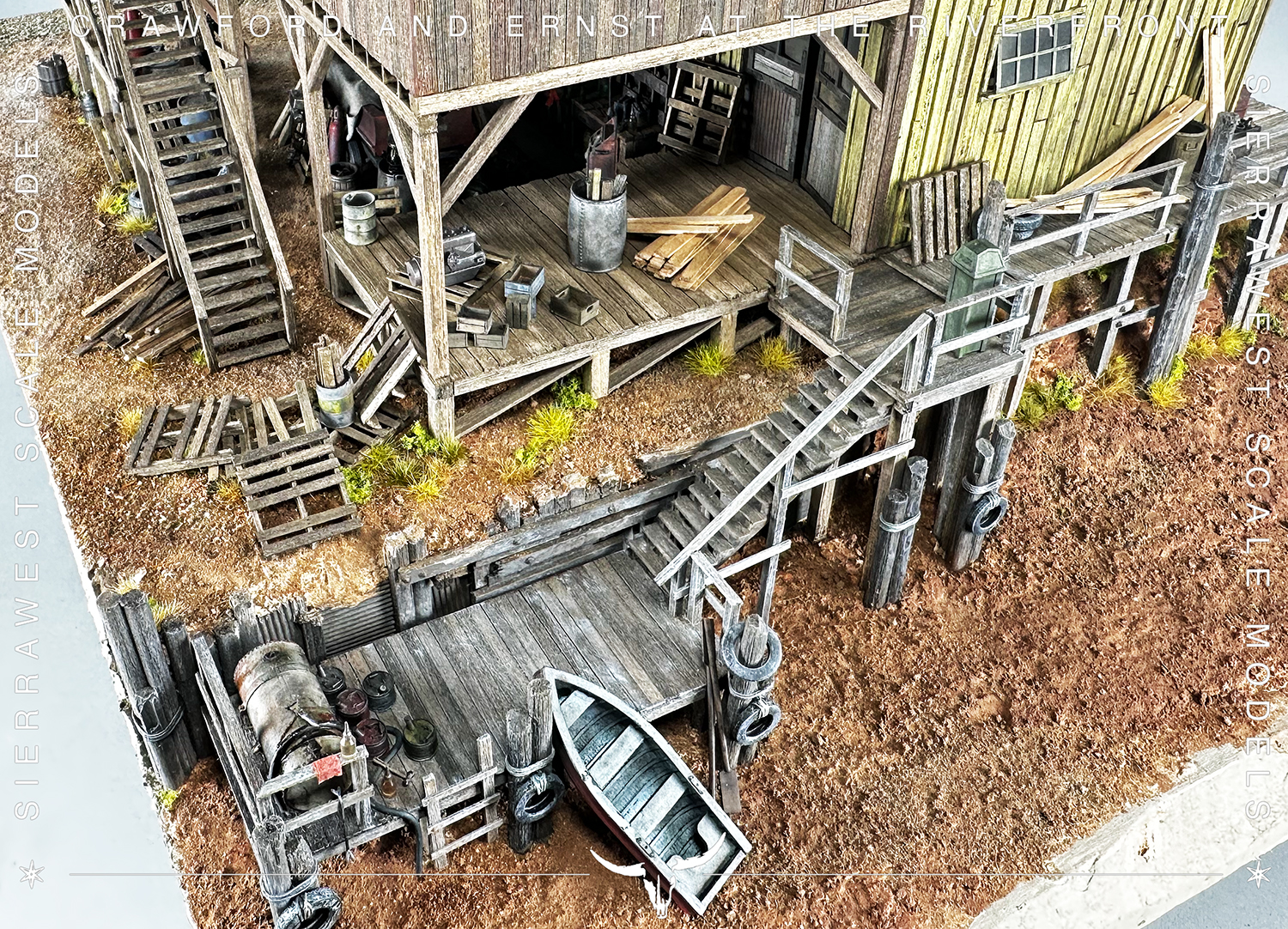 Now it is time to take a look at the “business” end of the Crawford and Ernst diorama. I chose not to pour water on my diorama (hence the dry riverbed) since I might choose to add a future kit or two to expand the riverfront theme. Trying to hide the seam between different water pours is very difficult. I just love the intricate appearance of the dock. It is actually quite easy to construct. I really enjoy modeling docks and piers as they are so interesting and full of character. Notice the 200 gallon tank on the left end of the lowest dock just waiting to fuel up the next barge to come along.
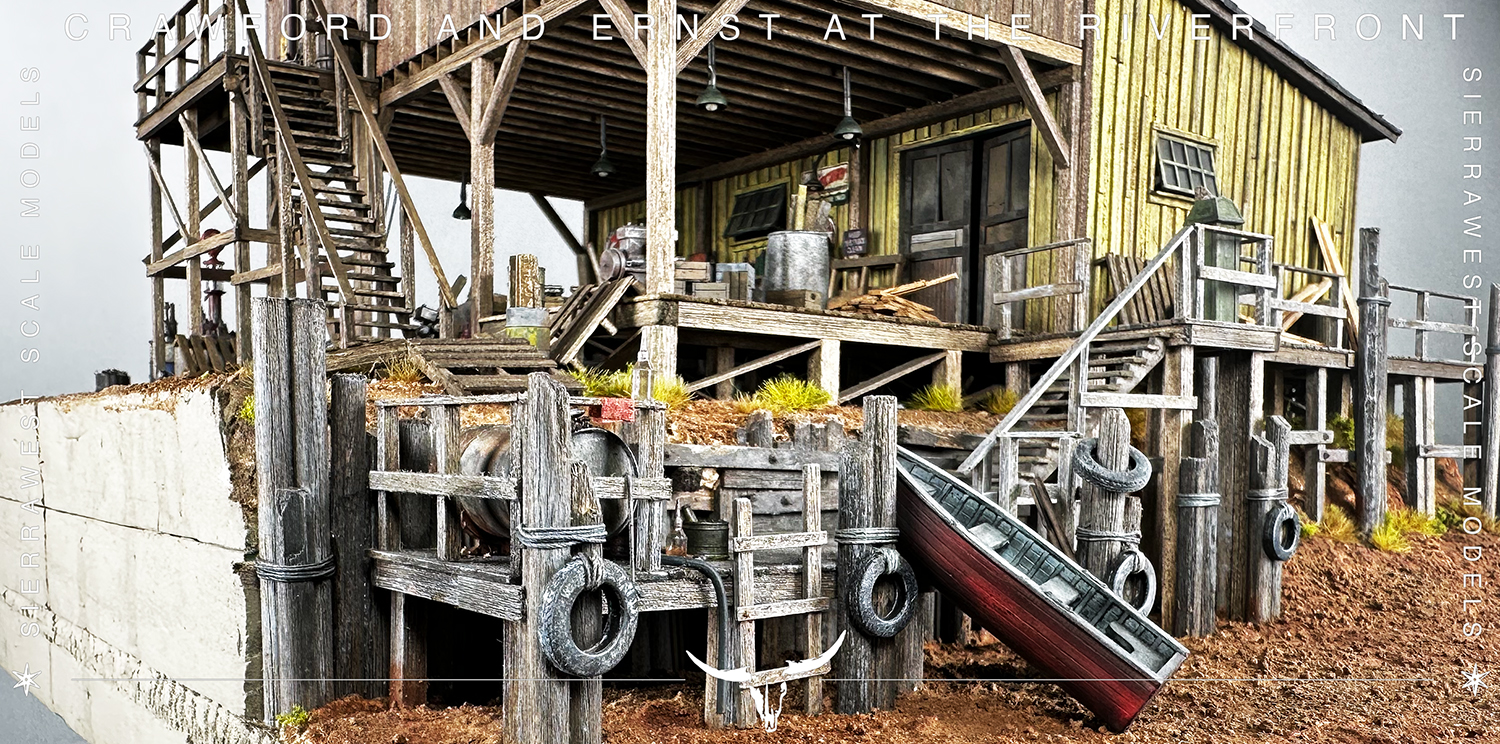 As we drop down to a waterline view it becomes apparent how well the dock integrates into the structure as well as the surrounding scenery. The creation of the scenery base is well documented and covered in detail in the construction manual. That is what makes a true craftsman kit special and is the very foundation of every kit I have produced since 1995. Thoughtfully researched and executed components with a detailed manual and accompanying templates. There is a lot of flexibility in the way you may choose to make the scene your own and customize it as you wish.
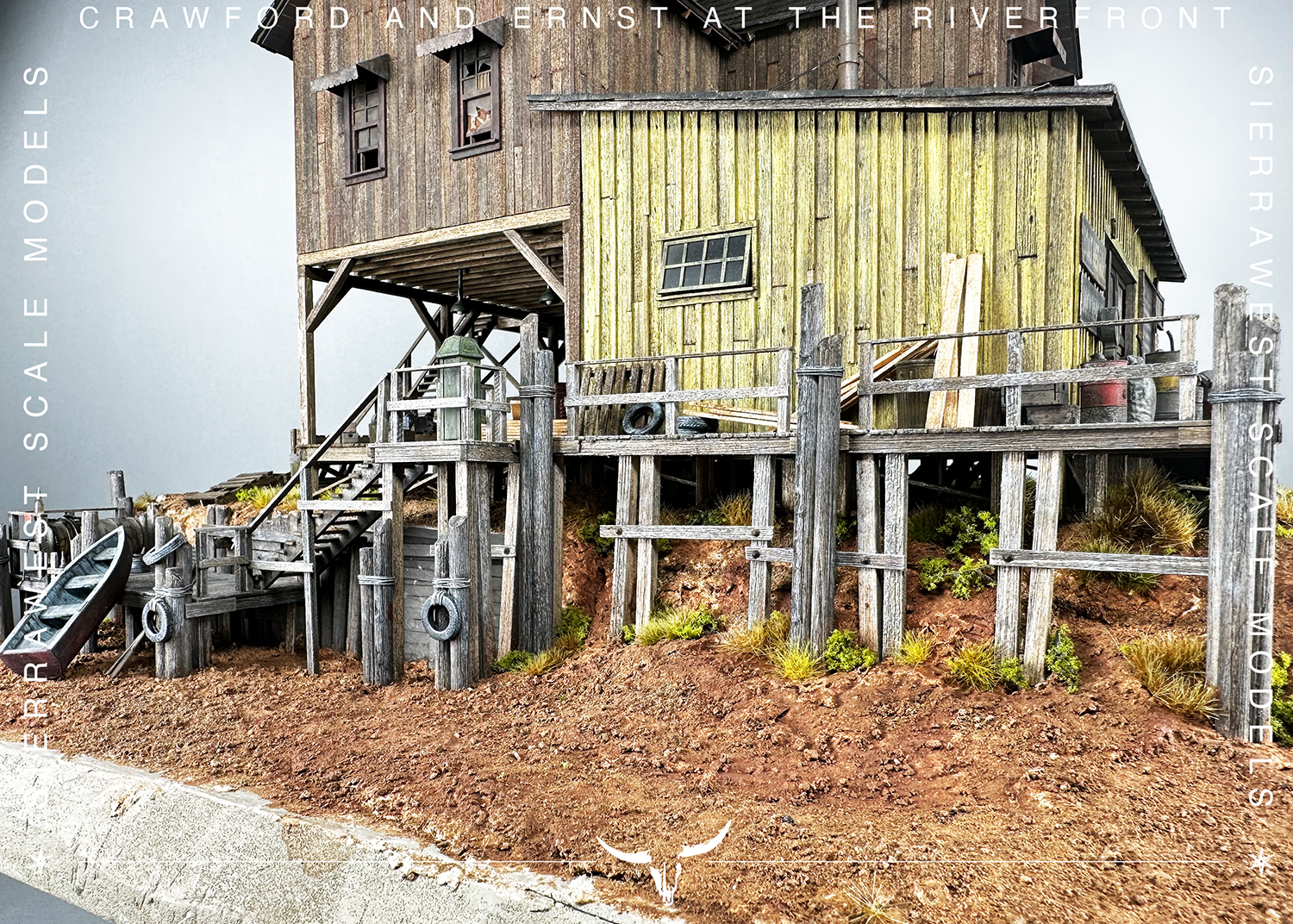 This second waterline view illustrates how important the creation of a prototypical scenery contour is. It establishes a believable waterfront scene and anchors (pun intended) the entire dock area. The docks, piling, cross supports, retaining wall, tire bumpers, and minimal greenery all combine to tell a great riverfront story. It is very different in appearance from a saltwater ocean or bay waterline. This is where a little research on the internet can be so valuable and help provide a good idea in your mind what the finished goal visually is before you ever begin to model.
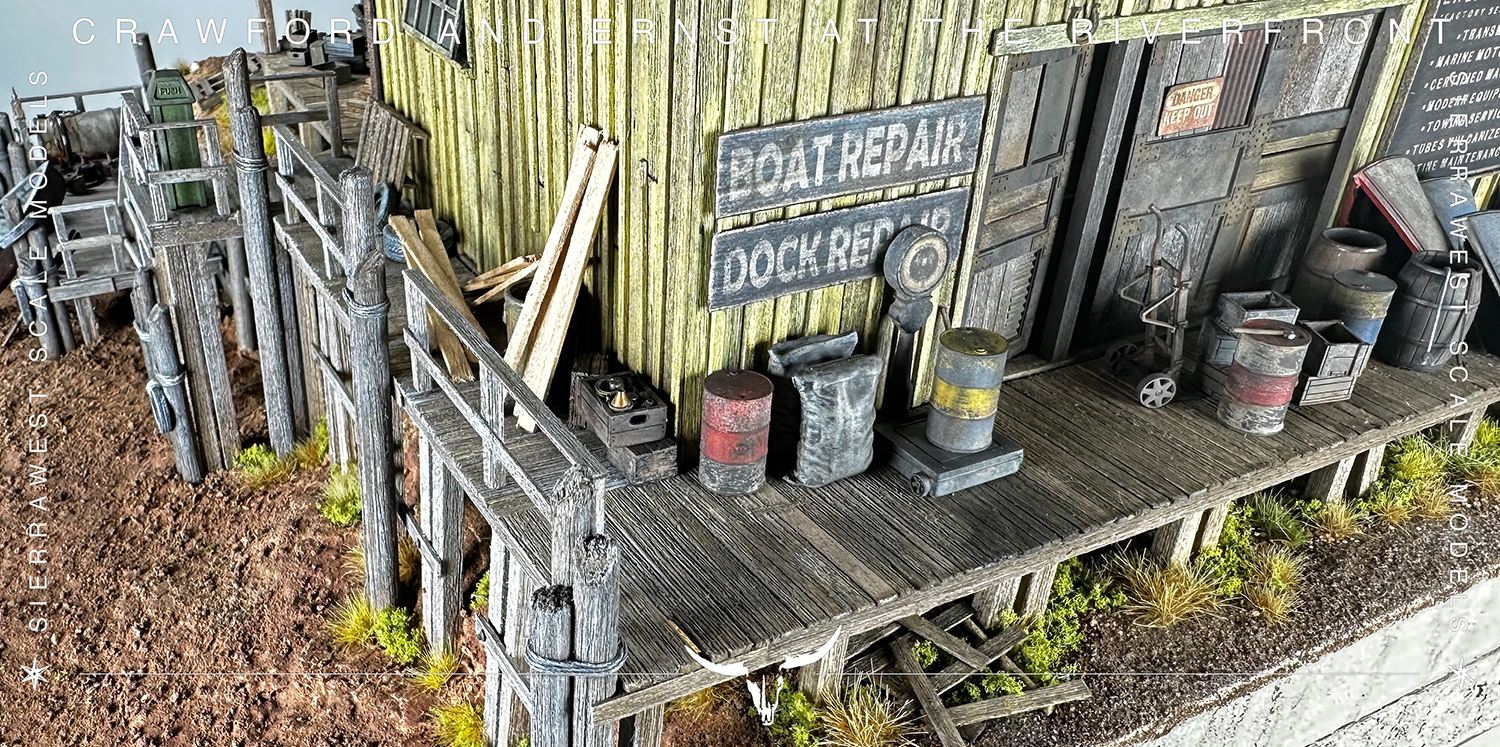 We end our 360 degree tour at the rear corner along the docks. The boat and dock repair signs are modified signs I found on the internet. They are perfect for this part of the wall. I love the doors leading into the main building. They were so much fun to model and provide a great opportunity for you to customize. So you might be asking yourself where the track is? There are couple logical locations to add rail if desired directly to this diorama but I do have plans as mentioned to add to the Crawford and Ernst diorama. The clue can be found in the mention of fueling up a barge! Thanks for taking the time to read all about the Crawford and Ernst at the Riverfront kit.
click here to
Return the Main Crawford and Ernst Page